By David E. Monday
As the rainy season gradually settles across Kaduna State and its surrounding communities, one reality continues to confront residents daily climate change is no longer a distant environmental theory; it is now a lived experience shaping our health, economy, safety, and survival.
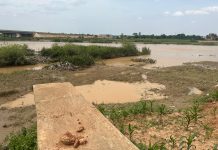
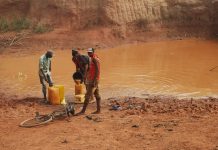
From flooded streets to blocked drainage systems, polluted water channels, erosion, and rising cases of waterborne diseases, the environmental challenges facing communities today demand urgent collective action.
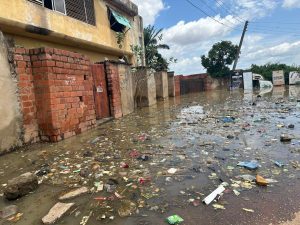
Across many neighborhoods in Kaduna metropolis and rural communities alike, heaps of refuse dumped into waterways continue to obstruct drainage systems, worsening flooding whenever heavy rainfall occurs.
The most pressing need in climate change response today is not merely discussion, but practical community adaptation and environmental responsibility.
While governments, development agencies, and environmental organizations continue to advocate policy reforms and climate awareness, citizens themselves must recognize that environmental protection begins at the grassroots.
Recent climate conversations organized by Interfaith Mediation Center in partnership with African Climate Reporters and the Office of the Special Adviser on Climate Change in Kaduna State could not have come at a more appropriate time.
The theme, “Addressing Climate Impacts on Water Flooding, Pollution, and Disease Prevention,” directly reflects the environmental realities currently unfolding across many communities.
One of the major observations during this rainy season is the poor maintenance of drainage channels in residential areas.
In several parts of Kaduna, drains meant to allow free flow of rainwater have become dumping sites for plastics, nylons, bottles, food waste, and household refuse.
The consequence is predictable overflowing gutters, flooded roads, damaged homes, and increased exposure to diseases such as cholera, typhoid, and malaria.
Environmental sanitation remains a critical but often neglected responsibility.
Kaduna State has long maintained the monthly sanitation exercise observed every last Saturday of the month, a policy intended to encourage environmental cleanliness and community participation.
However, compliance has gradually weakened over time.
Many residents no longer actively participate in sanitation activities, while some commercial activities continue during sanitation hours despite official restrictions.
The reasons may vary Economic hardship has forced many citizens to focus more on daily survival than environmental responsibility.
Others may simply lack adequate awareness about the direct connection between poor sanitation and public health risks.
Yet, regardless of these challenges, communities cannot afford to abandon environmental discipline.
Climate change has increased the intensity of rainfall patterns across many parts of Nigeria.
This means blocked drainage systems now pose even greater risks than before.
Flooding no longer only destroys roads and property; it disrupts livelihoods, contaminates water sources, displaces families, and increases vulnerability among already struggling populations.
Another important dimension often overlooked is household energy use.
With the rising cost of cooking gas across Nigeria, many families are increasingly returning to charcoal and firewood for domestic cooking.
While this may appear economically necessary, there is also a need for safer and more environmentally conscious usage.
Improper charcoal burning in enclosed spaces exposes families to severe health hazards, including respiratory illnesses and carbon monoxide poisoning.
At the same time, unsustainable dependence on firewood contributes to deforestation, which further worsens climate change impacts by reducing natural environmental protection against erosion and extreme weather conditions.
The conversation around climate change must therefore move beyond conferences and official speeches into homes, schools, markets, religious centers, and local communities.
Environmental responsibility must become part of everyday culture.
Religious leaders, traditional rulers, youth organizations, women groups, journalists, and civil society actors all have important roles to play in rebuilding environmental consciousness.
Public enlightenment campaigns must intensify, particularly among young people, because the future environmental stability of Kaduna depends largely on the habits communities build today.
Government agencies must also strengthen monitoring and enforcement mechanisms regarding waste disposal, drainage maintenance, and sanitation compliance.
Community based environmental volunteer groups can equally support local authorities in sustaining cleaner neighborhoods.
Climate change is no longer waiting for tomorrow.
The floods, heatwaves, erosion, pollution, and disease outbreaks already affecting communities are clear warnings demanding immediate action.
A cleaner drainage today may prevent a flood tomorrow.
Proper waste disposal today may save a community from disease outbreaks next month.
Environmental responsibility is no longer optional; it is a survival necessity.
As Kaduna navigates another rainy season, citizens and authorities alike must recognize that protecting the environment is ultimately protecting human life itself.
The time for environmental consciousness is now.
By David E. Monday
Development Journalist and Media Consultant, Kaduna
May 7, 2026
END –
davidemmanuelmonday7@gmail.com