By Ibrahima Yakubu
Climate change is often discussed in terms of rising temperatures, melting glaciers, and extreme weather events. But beyond the statistics lies a quieter, deeply human consequence: children growing up without their parents because the climate has made home no longer livable.
Across many regions affected by drought, flooding, desertification, and crop failure, families are being forced to make difficult decisions. When farming land becomes unproductive or fishing waters disappear, parents often migrate in search of work and survival. They move to cities or even across borders, taking on unstable jobs in construction, domestic work, or informal trading. What is left behind is not just land and property, but often children, now being raised by grandparents, extended relatives, or sometimes left to fend for themselves.


These children are increasingly referred to as “climate orphans,” though most still have living parents. The term captures a painful reality: emotional separation driven not by choice, but by environmental collapse.
In rural communities, this pattern is becoming more common. A failed rainy season can wipe out an entire year’s harvest. Floods can destroy homes in hours. When these events repeat over time, families slowly break apart under economic pressure. Parents leave with the hope of sending money back, but migration does not always guarantee stability. Many struggle to find steady income in overcrowded cities, and remittances become irregular or insufficient.
For the children left behind, the impact is layered. Grandparents or relatives may provide care, but they often lack the financial and physical capacity to fully replace parental presence. School attendance can suffer when fees are unpaid or when children are needed for farm work or household survival. Emotional consequences are just as significant,feelings of abandonment, anxiety, and uncertainty about the future are common but rarely addressed.

This phenomenon also reshapes communities. Villages lose a generation of working-age adults, leaving behind older populations and children. Social structures that once relied on family proximity begin to weaken. In some cases, entire local economies decline as labour and productivity shrink.
Yet, climate migration is not simply a story of loss. It is also a reflection of resilience in the face of environmental stress. Families are adapting to realities that are increasingly beyond their control. But adaptation should not mean separation becoming the norm.
Way Forward
Addressing the rise of “climate orphans” requires coordinated action that tackles both the environmental causes and the social consequences of climate migration.
First, investment in climate-resilient agriculture is essential. Supporting farmers with drought-resistant seeds, improved irrigation systems, flood-resistant storage facilities, and climate-smart farming techniques can reduce crop failure and help families maintain stable livelihoods at home. When rural income becomes more secure, forced migration decreases.
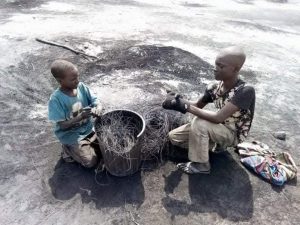
Second, governments and development partners must strengthen rural economies beyond farming alone. Creating local employment opportunities, such as agro-processing, renewable energy projects, and small-scale enterprises—can reduce the economic pressure that pushes parents to leave their children behind.
Third, social protection systems need to be expanded. Cash transfer programs, school feeding schemes, and child welfare support can help ensure that children in climate-affected communities continue their education and receive basic care even when families are under stress.
Fourth, migration itself should be made safer and more structured. Where relocation is unavoidable, policies should support family unity through affordable housing, access to education for migrant children, and pathways that allow parents to bring dependents when possible. Informal and dangerous migration routes often worsen family separation and insecurity.
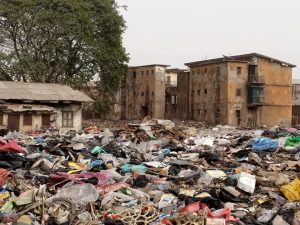
Fifth, community-based care systems should be strengthened. Local child protection networks, supported by governments and NGOs, can help monitor vulnerable children, provide psychosocial support, and ensure that grandparents and guardians are not left to shoulder the burden alone.
Finally, climate adaptation policies must recognize children as a priority group. Climate planning should not focus only on infrastructure and agriculture but also on social stability, education continuity, and child wellbeing in affected regions.
Ultimately, reducing the number of children left behind by climate migration requires treating climate change not only as an environmental crisis but as a family and social stability crisis. Protecting livelihoods at the source, supporting families through transitions, and ensuring children’s welfare remain central will determine whether climate adaptation leads to resilience or deeper social fragmentation.
The children left behind are not just victims of migration; they are a reminder that climate