By Ibrahima Yakubu
Climate change is no longer a distant scientific prediction, it is a lived reality shaping communities, economies, and daily survival. From flooding in cities to desertification in rural areas, environmental challenges are increasingly defining the present. In this evolving crisis, young journalists are emerging as some of the most important voices in telling the climate story.
A Generation Closest to the Climate Crisis
Young people are growing up in a world where climate disruptions are normal. Irregular rainfall, rising temperatures, flooding, and food insecurity are not abstract topics—they are lived experiences. This proximity gives young journalists a unique perspective and emotional connection to environmental issues that older generations of reporters may not fully share.
Because of this, youth-driven climate storytelling is often more urgent, relatable, and grounded in everyday realities.
Innovation in Climate Communication
One of the most significant advantages young journalists bring is innovation. Unlike traditional reporting formats, young media practitioners are increasingly using digital tools and platforms to communicate climate issues in creative ways.
Through social media storytelling, short videos, podcasts, infographics, and mobile journalism, they are simplifying complex environmental issues for wider audiences. This approach makes climate information more accessible, especially for other young people and rural communities who may not engage with traditional news sources.
Breaking the Silence Around Environmental Issues
In many communities, climate change is still not fully understood or discussed in depth. Young journalists are helping to change this by breaking down technical concepts into simple, relatable stories.
They are also amplifying voices that are often ignored—such as women farmers, rural dwellers, and flood-affected families—ensuring that climate narratives are more inclusive and human-centered.
Digital Activism and Climate Awareness
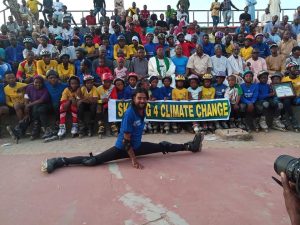
Beyond traditional journalism, many young reporters are also climate advocates. They are using digital platforms not only to report but also to mobilize action, raise awareness, and challenge misinformation.
Hashtags, online campaigns, and community storytelling are becoming powerful tools for engaging the public and influencing environmental behavior. This blend of journalism and activism is reshaping how climate stories are told and consumed.
Challenges Facing Young Climate Journalists
Despite their growing influence, young climate journalists face several challenges. These include limited funding, lack of formal training in environmental reporting, and difficulties accessing scientific data or institutional sources.
In some cases, their voices are also undervalued within mainstream media spaces, limiting their reach and impact.

The Future of Environmental Reporting
The future of climate journalism will depend heavily on how well young storytellers are supported and integrated into mainstream media systems. Investing in training, mentorship, and digital tools for young journalists is essential for strengthening environmental reporting.
Media organizations, civil society groups, and development partners must recognize that youth are not just future journalists—they are current drivers of climate communication.
Conclusion
Youth engagement in climate storytelling is transforming environmental journalism. Their creativity, digital fluency, and lived experiences make them powerful messengers in a time of environmental uncertainty.
As climate challenges intensify, empowering young journalists is not optional—it is necessary for building informed, resilient, and climate-conscious societies.