By Ibrahima Yakubu
Migration has long been reported through the lens of conflict, economic hardship, and search for better opportunities. However, a new and rapidly growing driver of human movement is becoming impossible to ignore: climate change. Across many regions, especially in parts of Nigeria and the wider Sahel, rising floods, advancing desertification, and land degradation are forcing thousands of people to leave their homes. Yet, this form of displacement remains underreported in mainstream journalism.
The Silent Exodus Driven by Climate Stress
Unlike sudden conflicts that dominate headlines, climate displacement often unfolds gradually. Families do not always wake up one day and decide to leave; instead, they are pushed by years of declining harvests, shrinking water sources, and increasingly unlivable conditions.

In northern Nigeria, desertification continues to swallow fertile land, reducing agricultural productivity and limiting livelihoods. Communities that once depended on farming and grazing are finding it harder to survive in their ancestral lands. Similarly, seasonal flooding in riverine and urban areas destroys homes, displaces families, and disrupts entire local economies.
Over time, these pressures force movement—first within communities, then to nearby towns, and eventually to distant cities in search of survival.
Floods and the Cycle of Repeated Displacement
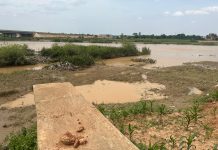
Flooding has become one of the most visible drivers of climate displacement. Each rainy season brings a familiar pattern: rising water levels, submerged homes, destroyed infrastructure, and temporary camps for displaced families.
However, what is often missing from media coverage is the long-term impact. Many displaced families return home only to face repeated flooding the following year. This cycle creates instability, poverty, and permanent vulnerability, gradually turning temporary displacement into permanent migration.
Desertification and the Loss of Livelihoods
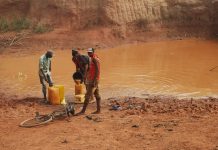
In the northern Sahelian belt, desert encroachment is not just an environmental issue—it is a human crisis. As land becomes infertile and water sources dry up, farming and pastoral livelihoods collapse.
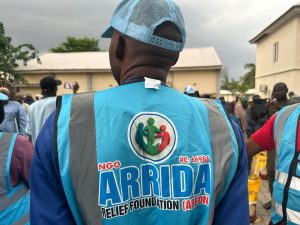
For many young people, this loss means leaving rural communities for urban centers such as Kaduna, Kano, Abuja, and other growing cities. This rural-urban migration is increasingly climate-driven, even when it is not officially recognized as such.
The Urban Pressure That Follows
Climate displacement does not end with movement; it simply shifts the pressure. Cities receiving displaced populations often struggle with overcrowding, unemployment, inadequate housing, and strained public services.
This creates a secondary crisis that is often misinterpreted as purely economic migration, when in fact it is deeply connected to environmental breakdown.
Why Journalism Is Missing the Story
One of the major gaps in environmental and migration reporting is the failure to connect climate change with human movement. Many stories focus on disasters in isolation—floods here, droughts there—without linking them to long-term displacement patterns.

As a result, climate migrants are often invisible in policy discussions. Their struggles are not fully documented, and their needs are not adequately addressed in national planning or humanitarian response frameworks.
The Role of Journalists in Reframing the Narrative
Journalists have a critical responsibility to reshape how climate displacement is understood and reported. This includes:
Recognizing climate change as a key driver of migration
Following displaced communities beyond the immediate disaster event
Highlighting long-term social and economic impacts of relocation
Using data and human stories to connect environmental change with human movement
Giving voice to affected families who are often excluded from mainstream narratives
Conclusion
Climate displacement is not a future problem—it is happening now. It is quietly reshaping demographics, livelihoods, and urban growth patterns across vulnerable regions.

For journalism to remain relevant, it must expand its lens beyond visible disasters and begin telling the deeper story of movement, survival, and adaptation. Only then can the full reality of climate change be understood—not just as an environmental issue, but as a human one