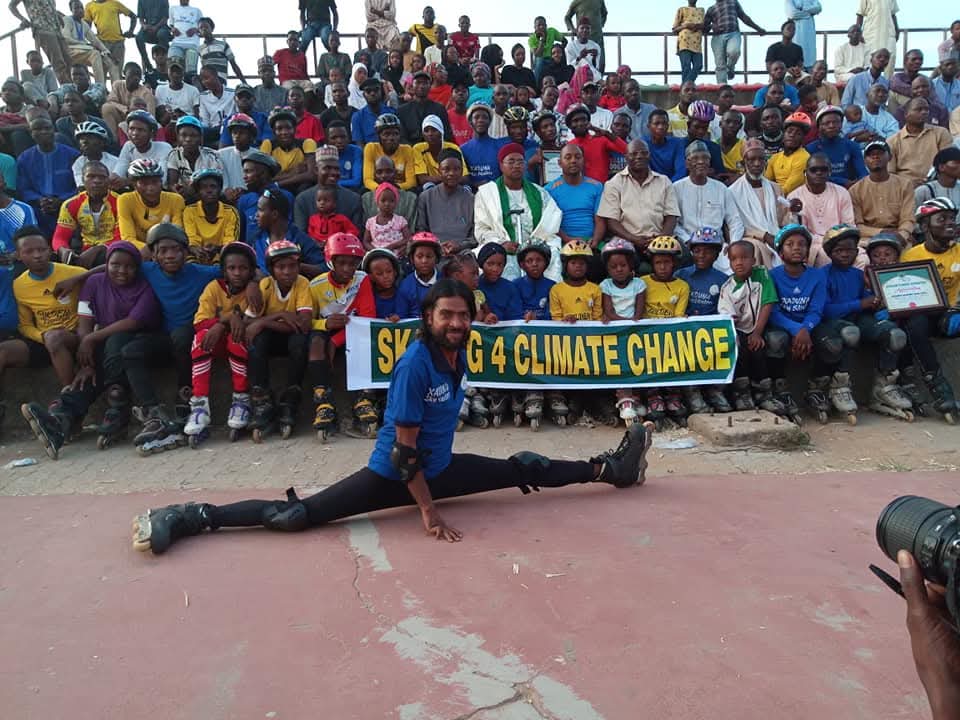
By:Abel Y. Hayas
A youth environmental advocate has issued a sweeping open letter to Nigeria’s political class, demanding that environmental protection and climate action be placed at the heart of manifestos for the upcoming 2027 general elections.
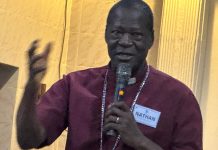
Cmrd. Abel Y. Hayas, Head of Environment, Climate Change and Mitigation at the NACCIMA Youth Entrepreneurs (NYE) Kaduna State Chapter, published the letter on Thursday, framing the 2027 polls as a “defining moment” for the survival of Nigeria’s environment and the security of future generations.
‘A Nation at Risk’
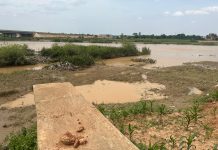
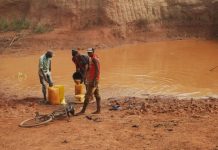
Hayas painted a stark picture of Nigeria’s environmental crisis, citing devastating annual floods that affected over 4.4 million people in 2022, the rapid southward advance of desertification in the north, and the shrinking of Lake Chad by over 90% in six decades. He also highlighted deforestation occurring at 3.7% annually, one of the world’s highest rates alongside pollution crises from Port Harcourt’s soot to oil spills in the Niger Delta.
“These are not natural curses,” Hayas wrote. “They are the consequences of policy neglect, weak enforcement of environmental laws, unsustainable development practices, and a political culture that treats environmental protection as an afterthought.”
Six ‘Non-Negotiable’ Demands
The letter calls on all political parties and aspirants to commit to six environmental priorities:
1. Climate Adaptation and Resilience: A National Climate Resilience Plan with measurable targets, climate smart agriculture investment, and updated urban planning codes.
2. Afforestation and Ecosystem Restoration Planting at least 10 million trees annually at the state level, protecting forest reserves, and restoring degraded wetlands.
3. Renewable Energy Transition, A roadmap to diversify beyond fossil fuels through solar, wind, and hydroelectric power, with incentives for off grid rural solutions.
4. Waste Management and Circular Economy A national strategy prioritizing reduction, reuse, and recycling, alongside “waste to wealth” job creation initiatives.
5. Environmental Justice for the Niger Delta Genuine remediation of oil polluted lands with affected communities at the center of decision making, and holding oil companies accountable.
6. Green Governance Dedicated, funded environmental desks at all government levels, mandatory environmental impact assessments with public disclosure, and integration of environmental metrics into national economic planning.
Rejecting the ‘Elitist’ Label
Hayas directly challenged the notion that environmental issues are secondary to poverty, unemployment, and insecurity.
“A farmer whose land has turned to desert becomes unemployed. A community whose water source is polluted falls into disease and destitution. Youths displaced by environmental disasters become easy recruits for criminality and unrest,” he argued.
He noted that environmental action creates jobs in renewable energy, sustainable agriculture, waste management, and ecosystem restoration, while reducing healthcare costs and attracting international climate finance.
A Call to Youth Voters
The letter specifically appealed to young Nigerians to “make the environment a ballot-box issue” and to vote for “the clearest vision of a sustainable Nigeria” rather than “the loudest voice or the deepest pocket.”
Hayas referenced the Coalition for Change (C4C) manifesto, which has proposed planting 130 million trees nationwide and establishing green cities, as a positive example of environmental prioritization.
Copies to Stakeholders
“The 2027 election must not be business as usual,” Hayas concluded. “We do not want promises written in sand, washed away by the next flood. We want commitments etched in law, backed by budgetary allocation, and enforced with political will.”
Published by Cmrd. Abel Y. Hayas