By Comred Abel Y. Hayas
Environmental Advocate and Founder, DIYAH, Kaduna, Nigeria.
Nigeria’s agricultural sector, long considered the backbone of the national economy, is facing what experts describe as an existential threat from climate change, with farmers across Northern Nigeria bearing the brunt of increasingly erratic and delayed rainfall patterns.
In Kaduna State and surrounding regions, the seasonal rains that once arrived with clockwork precision have become unpredictable, leaving farmers in prolonged uncertainty and shrinking critical planting windows. The consequences, according to climate and agricultural advocates, are already being felt across multiple dimensions.
The Crisis: When the Rains Don’t Come
Research confirms that Nigeria is experiencing increasingly erratic rainfall, prolonged dry spells, and extreme weather events that disrupt agricultural productivity. Northern Nigeria, including Kaduna State, has been identified as particularly vulnerable to climate shocks, with documented risks of late rains and drying streams.
The impact is severe and multidimensional. When rains arrive late, farmers who have already planted lose seedlings to heat and drought, while those who wait miss the optimal growing season entirely. Reduced agricultural output translates directly into higher food prices and diminished food availability for millions of Nigerians. Smallholder farmers, who constitute the majority of the country’s agricultural workforce, are pushed deeper into poverty. Perhaps most concerning, the uncertainty of rain-fed agriculture is discouraging young people from pursuing farming, accelerating rural-urban migration.
Currently, over 90% of Nigeria’s agricultural production depends on rainfall a dependency advocates warn is increasingly dangerous in an era of climate volatility.
Irrigation as a Lifeline
Against this backdrop, irrigation farming is being championed not merely as an alternative, but as an essential adaptation strategy.
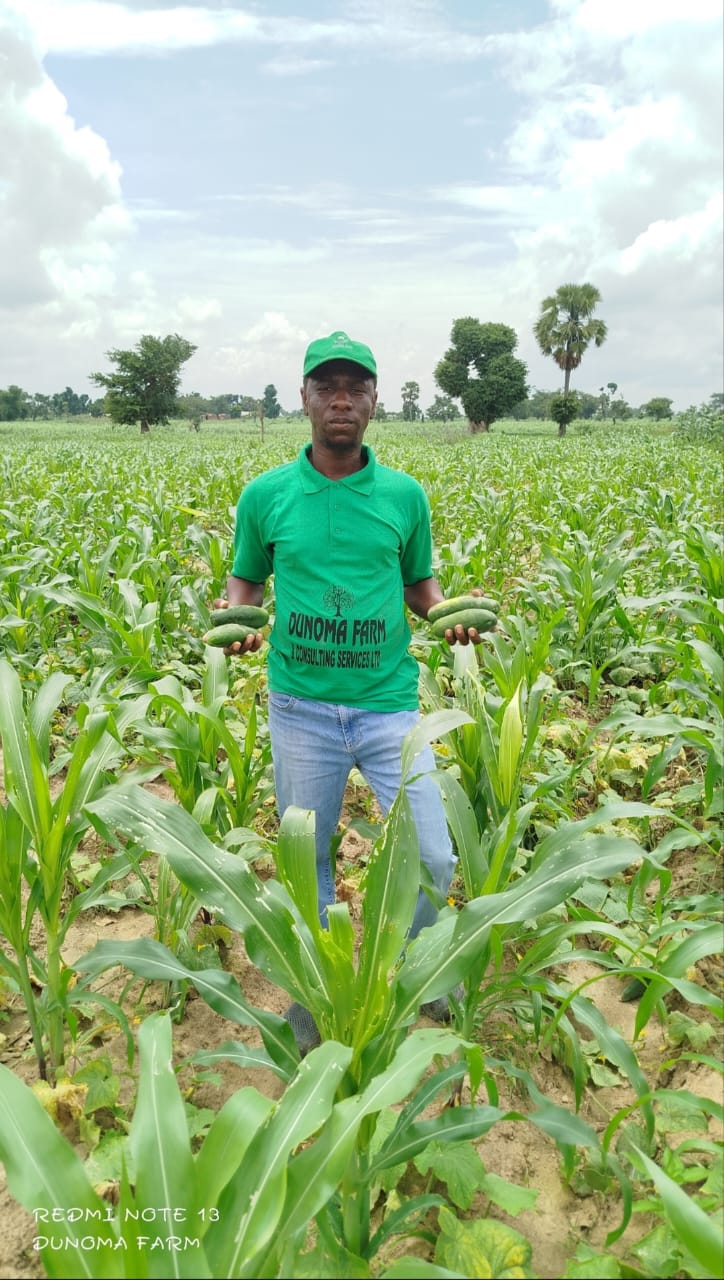
“Irrigation transforms agriculture from a weather dependent gamble into a manageable, productive enterprise,” said Comred Abel Y. Hayas, Founder and Executive Director of DIYAH and Head of Environment, Climate Change and Mitigation at NACCIMA Youth Entrepreneur, Kaduna State Chapter.
The benefits, he says, are substantial. Irrigation enables year-round production, effectively doubling farmers’ productive capacity and income potential. Evidence from across the Sahel region supports this claim. In Senegal, farmers with improved irrigation access reported being able to cultivate throughout the year, including the dry season. In Chad, irrigation initiative participants saw okra yields surge from two or three sacks to between 100 and 150 sacks after gaining reliable water access.
Beyond productivity, irrigation allows farmers to diversify into high value crops such as vegetables, fruits, and cash crops that command premium prices in local and international markets. It is also a cornerstone of Climate Smart Agriculture (CSA), a framework designed to sustainably increase productivity, strengthen resilience to climate change, and reduce greenhouse gas emissions.
Scalable Solutions Already at Work
Advocates emphasize that irrigation does not require massive government-built dams. A range of affordable, scalable technologies is already available for smallholder farmers and youth entrepreneurs, including drip irrigation, sprinkler systems, surface irrigation, solar powered pumping, and water saving techniques such as Alternate Wetting and Drying (AWD).
In states including Kano, Kaduna, Kebbi, and Sokoto, shallow groundwater tube wells have already facilitated year-round crop production and bolstered food security. These models, proponents argue, can be replicated and scaled across Kaduna State and beyond.
Youth Entrepreneurs Urged to Lead
Young Nigerian entrepreneurs are being called upon to spearhead what some are terming an “irrigation revolution.” As natural adopters of innovation and technology, NACCIMA youth entrepreneurs are positioned to drive the uptake of modern irrigation systems from solar powered pumps to smart systems using sensors and mobile apps.
Beyond farming itself, opportunities exist across the value chain: irrigation equipment supply and maintenance, water sourcing and management services, production and marketing of irrigated high value crops, and training and extension services for fellow farmers.
“Seeing is believing,” Hayas noted. “Successful irrigation models can drive widespread adoption through community outreach and demonstration farms.”
Barriers Remain
Despite its clear benefits, irrigation adoption in Nigeria remains strikingly low. Key barriers include high initial costs, lack of technical knowledge, weak policy coordination, limited access to water sources, and market access challenges for irrigated produce.
To unlock the full potential of irrigation, advocates say markets need investment, an enabling policy environment, and better coordination between agricultural programs.
Calls to Action
Hayas issued direct calls to multiple stakeholders:
– Government: Prioritize small scale and farmer led irrigation in national and state agricultural strategies; provide subsidies, tax breaks, and low-interest loans; invest in sustainable water infrastructure; and strengthen agricultural extension services.
– Financial Institutions: Develop flexible irrigation specific loan products and work with government and insurers to create climate risk insurance for irrigated agriculture.
– Youth Entrepreneurs: Embrace irrigation as a viable business opportunity, form cooperatives to pool resources, leverage technology such as drones and IoT sensors, and stay updated on the latest climate adaptation strategies.
– Farmers: Transition gradually starting with affordable technologies, adopt water-saving practices like drip irrigation and AWD, and diversify into higher-value crops.
Conclusion
With delayed rainfall becoming the new normal rather than an anomaly, waiting for the rains is no longer a viable strategy for Nigerian farmers particularly in Kaduna State and the broader Northern region.
“The tools, technologies, and knowledge exist,” Hayas said. “What is needed now is the will to act the will to irrigate, to innovate, and to build a food secure Nigeria that thrives despite the changing climate.”
“The rains may be delayed, but our resolve must not be. Let us irrigate our fields, our futures, and our nation’s prosperity.”
About the Author: Comred Abel Y. Hayas is the Founder and Executive Director of DIYAH, a Member of the NGO Founders Global Network, an Environmental Advocate, and the Head of Environment, Climate Change and Mitigation at NACCIMA Youth Entrepreneur, Kaduna State Chapter. He is passionate about empowering young Nigerian entrepreneurs to adopt climate smart agricultural practices and build resilient, profitable agribusinesses.