By ibrahima yakubu
On a busy morning in Kaduna North, the rhythm of market life carried on as usual,vendors calling out to customers, pots simmering, and food changing hands quickly. But behind the scenes, something different was happening.
For many of the food vendors gathered that day, it was their first time learning that something as simple as proper handwashing could protect not just their customers,but their livelihoods.
“I didn’t know there was a correct way to wash hands,” one vendor admitted after carefully practicing each step during a live demonstration.
The training was part of a Community Development Initiative (CDI) led by Nafisa Muhammad Nasir, a fellow under the Nigeria Jubilee Fellows Programme, in commemoration of World Health Day 2026. Marked under the theme “Together for Health ,stand with Science,” the initiative focused on improving food safety practices among local vendors.
Over 200 food sellers and hawkers took part in the one-day outreach, held across key road corridors in Kaduna North. But beyond the numbers, the impact was deeply personal.
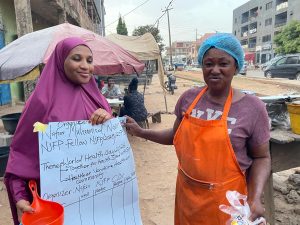
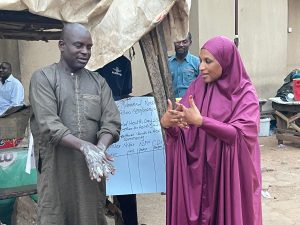
Participants didn’t just listen, they practiced. From mastering the World Health Organization’s seven-step handwashing method to learning when and how to wash hands during food preparation and sales, vendors engaged in hands-on learning that many described as eye-opening.
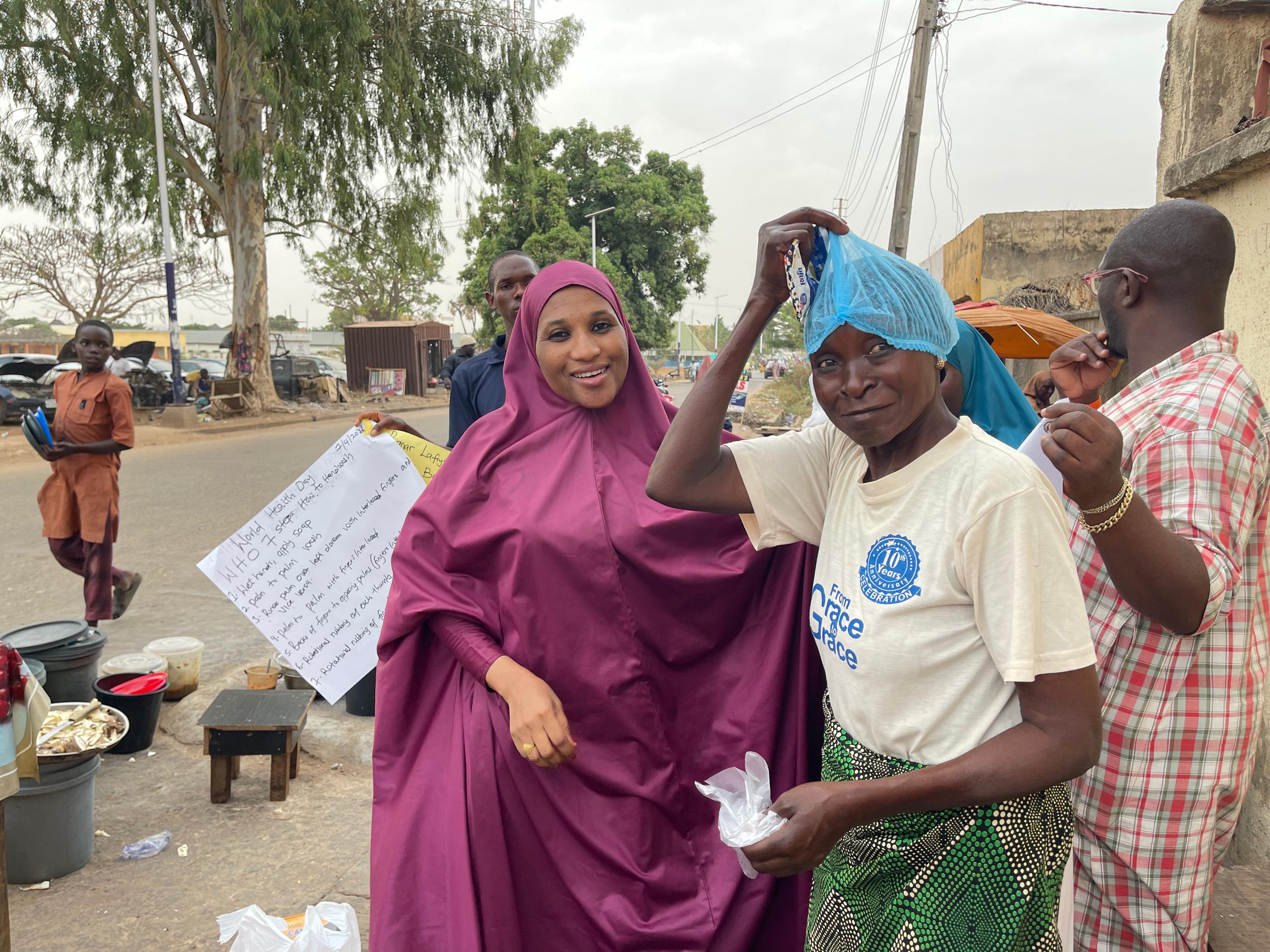
“I will start using gloves and covering my hair when serving food,” another participant said, holding up her newly received hygiene kit.
Each vendor left not only with new knowledge but also with practical tools: soap, detergent, hand sanitizers, caps, and gloves. More importantly, they signed a pledge—a simple but powerful commitment to safer food practices.
For Nasir, the goal was clear: make health education practical, relatable, and lasting.
“When you improve hygiene at the point where food is prepared and sold, you stop health risks before they even begin,” she explained.
With over 200 vendors trained, the ripple effect is significant. Each vendor serves dozens—sometimes hundreds—of customers daily, meaning thousands of people could benefit from safer food handling practices.
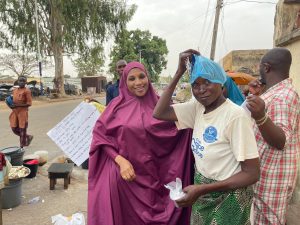
Community leaders also played a key role, adding their signatures to the pledge board. Their involvement signaled that this was not just a one-day intervention, but a shared commitment to community well-being.
The initiative reflects the broader mission of the NJFP, supported by the Nigerian Government in partnership with the United Nations Development Programme and the European Union—to empower young leaders to drive practical, evidence-based change at the grassroots level.
For Nasir, however, the success of the project is best measured not in statistics, but in small, visible changes.
“A vendor choosing to wash their hands at the right time, or to wear gloves while serving—that’s where real impact begins,” she said.
As the market gradually returned to its usual pace, one thing had quietly shifted: behind every plate served, there was now a greater awareness of health, safety, and responsibility.
And in Kaduna North, that shift could make all