By David E. Monday
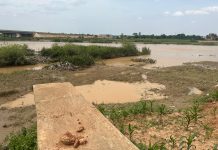
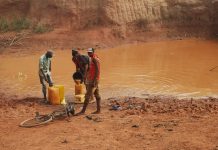
Across many rural communities in Southern Kaduna, the consequences of climate change are no longer distant environmental predictions discussed only at international conferences.
They are now visible realities shaping livelihoods, food production, migration patterns, insecurity, and communal relationships.
While violent conflict in Nigeria is often discussed through ethnic, political, or religious lenses, one of the most overlooked drivers of instability remains the growing environmental pressure confronting vulnerable rural populations.
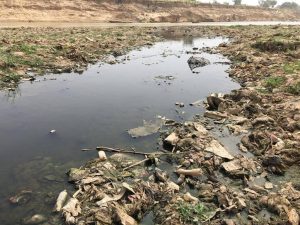
Behind the recurring farmer herder tensions, displacement of farming communities, destruction of livelihoods, and rising rural poverty lies a silent but dangerous crisis climate change.
For decades, agriculture has remained the economic backbone of Southern Kaduna.
Farming communities depend heavily on predictable rainfall, fertile land, rivers, and stable weather conditions for survival.
However, changing climate patterns have disrupted this fragile balance.
Erratic rainfall, prolonged dry seasons, environmental degradation, and increasing pressure on land resources are gradually transforming competition for survival into conflict.
In many northern parts of Nigeria, desertification and shrinking grazing areas continue to push pastoral movements further southward in search of water and pasture.
As migration routes expand into farming territories, tensions over land use, grazing access, and crop destruction become increasingly unavoidable.
Unfortunately, weak land management systems, poor conflict resolution structures, and deepening mistrust between communities often turn these tensions into violence
the result is devastating.
Farmers abandon farmlands out of fear Rural markets collapse, Food production declines.
Entire communities experience displacement.
Women and children become the worst victims of hunger and economic hardship.
In several affected communities across Southern Kaduna, farming activities have reduced significantly because insecurity now prevents many residents from accessing their farms safely.
The consequences extend far beyond local communities.
When rural agricultural production declines, food prices rise in urban areas, Inflation increases, Poverty deepens, national food security weakens.
This is why the climate conflict crisis in Southern Kaduna should no longer be treated merely as a local security issue.
It is both a developmental emergency and a national economic concern.
Sadly, much of the national conversation still focuses primarily on military responses after violence has already occurred, rather than addressing the environmental and economic pressures fueling these tensions.
Without confronting the root causes, the cycle may continue indefinitely.
One of the most urgent realities requiring attention is the absence of sustainable climate adaptation strategies for vulnerable rural communities.
Many farmers still rely on traditional agricultural methods despite changing environmental conditions.
Irrigation infrastructure remains limited in several areas.
Access to modern farming technology, drought resistant crops, and agricultural extension services is inadequate.
At the same time, pastoral communities facing shrinking grazing opportunities also struggle with survival pressures worsened by environmental degradation.
This reality demands balanced and courageous policymaking.
Government authorities must move beyond political debates and begin implementing practical long term solutions capable of protecting both livelihoods and social stability.
One major area requiring serious attention is ranching development.
While ranching conversations often generate political controversy, the reality is that open and uncontrolled grazing patterns are becoming increasingly difficult to sustain under modern environmental and population pressures.
However, successful ranching policies must be implemented carefully, transparently, and inclusively to avoid further distrust and resistance.
Communities must be consulted, land rights protected, and economic support provided for transition processes,
equally important is investment in climate smart agriculture.
Rural farmers need access to
Improved seedlings
Irrigation support
Soil management education.
Agricultural financing
Storage facilities
Modern farming equipment
Strengthening agricultural resilience can reduce economic desperation and improve food security,
Water resource management is another critical priority.
Competition over water access increasingly contributes to local tensions in many rural regions.
Sustainable water infrastructure projects, including dams, boreholes, and irrigation systems, can significantly reduce pressure on communities.
Beyond infrastructure, peacebuilding efforts must become more intentional and community centered. Dialogue platforms involving farmers, herders, traditional rulers, religious leaders, women groups, and youth representatives are essential for rebuilding trust and preventing escalation of disputes.
Communities that once coexisted peacefully for generations must not be allowed to become permanently divided by environmental pressures and political failures.
There is also a need for stronger government presence in vulnerable rural areas.
Many communities feel abandoned after repeated attacks and destruction.
Restoring public confidence requires visible investment in security, healthcare, education, roads, and rural development.
Climate change is not merely an environmental issue anymore.
It is increasingly a security issue, a humanitarian issue, and a governance issue.
Southern Kaduna stands today at the intersection of environmental vulnerability and social instability.
Ignoring this dangerous connection may deepen future crises not only within Kaduna State but across Nigeria.
The path forward requires bold leadership, evidence based policies, inclusive dialogue, and sustainable rural investment.
The hidden war destroying livelihoods in Southern Kaduna cannot be solved through condemnation alone.
It requires long term commitment to climate adaptation, economic justice, peacebuilding, and human security.
If Nigeria fails to address the environmental roots of rural conflict today, tomorrow’s instability may become far more difficult and far more expensive to contain.
By David E. Monday
Development Journalist and Media Consultant, Kaduna
May 11,2026